As James Turrell prepares to unveil his newest Skyspace, As Seen Below – The Dome, at ARoS Art Museum in Denmark, interest in the artist’s work continues to grow worldwide. A recent Financial Times article explores the ideas that have shaped his practice for more than six decades, ideas that visitors to Tremenheere can experience first-hand through Tewlwolow Kernow and Aqua Oscura in the gardens.
“I always wanted people to value light.”
Known internationally for his Skyspaces, Ganzfeld installations and the ongoing Roden Crater project in Arizona, Turrell’s work invites visitors to look more closely at something often taken for granted: the act of seeing.
“I paint with light,” he explains. “I use light to work the medium of perception.”
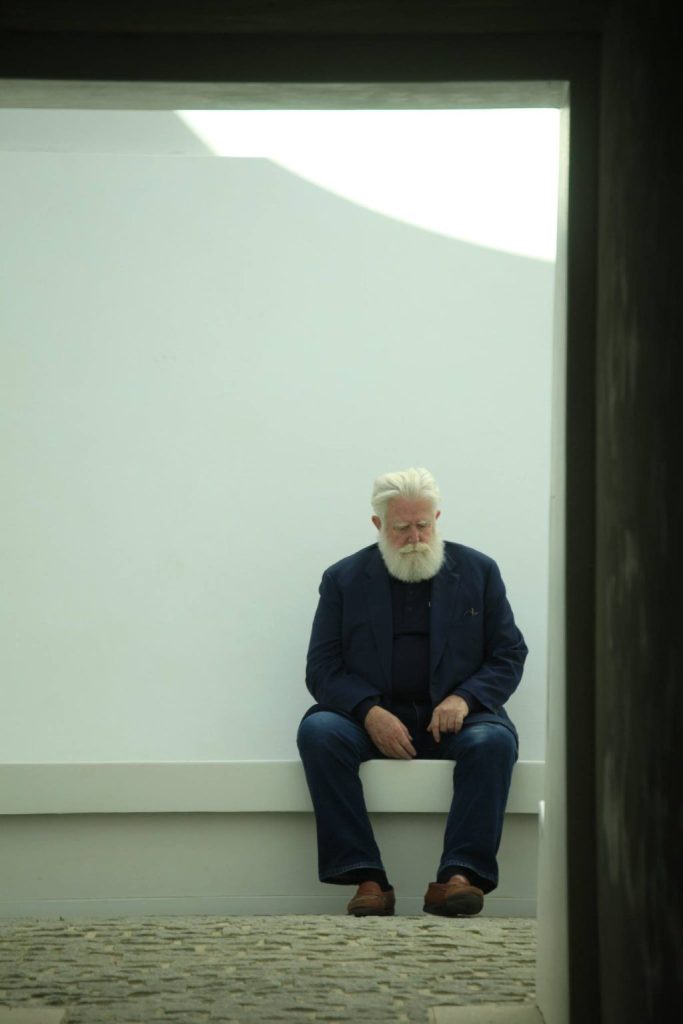
Rather than creating images or objects, Turrell creates experiences. His works alter our awareness of colour, space and atmosphere, encouraging moments of quiet observation and contemplation. Through carefully controlled light and architectural intervention, familiar things can suddenly appear unfamiliar. A grey sky can seem blue. A wall of light can appear solid. Space itself becomes uncertain.
At the heart of many of these works is a simple but profound question: what does it mean to truly look?
This question is central to Turrell’s Skyspaces, a series he began in 1974 and continues to develop around the world. Each Skyspace consists of an enclosed chamber with an aperture open to the sky above. Framed in this way, the sky becomes both subject and material, changing continually with light, weather, season and time of day.
Visitors to Tremenheere Sculpture Gardens can experience this directly through Tewlwolow Kernow, Turrell’s permanent Skyspace situated within the gardens.
Approached through a winding path and set within the landscape, Tewlwolow Kernow offers a place to sit, pause and observe. The opening above frames a shifting portion of sky, encouraging visitors to notice subtle changes in colour, light and atmosphere that might otherwise pass unnoticed.
Although each visit is different, the experience often shares something of the contemplative quality that runs throughout Turrell’s work. His Quaker upbringing, with its tradition of silent reflection and attention, has long informed his approach. Rather than directing viewers towards a specific interpretation, his works create the conditions for individual experience.
As Turrell’s wife, artist Kyung-Lim Lee, describes in the same Financial Times feature, encountering one of his Skyspaces can feel both like a communion and a confrontation, a reminder of our relationship with the world beyond ourselves.
More than fifty years after creating his first Skyspace, Turrell continues to challenge assumptions about perception and reality. Yet the experience of his work remains remarkably simple. It begins with sitting still, looking up, and allowing time to slow.
Visitors to Tremenheere can experience not one but two works by James Turrell. Alongside Tewlwolow Kernow, his Skyspace nestled within the gardens, is Aqua Oscura, an installation housed within a former Victorian water reservoir.
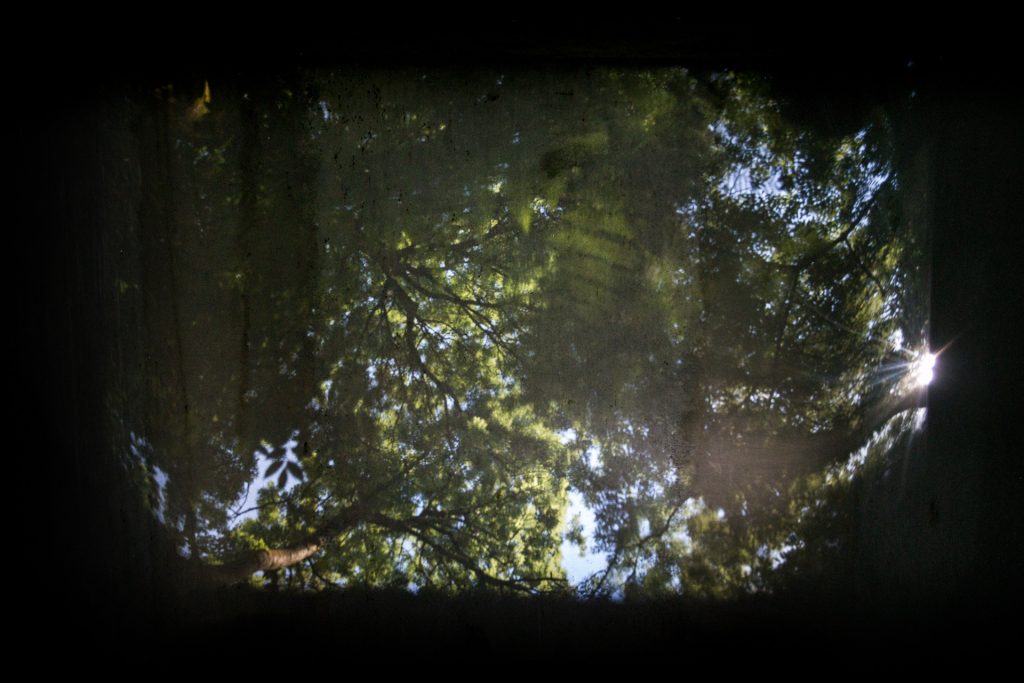
In contrast to the open relationship with the sky offered by Tewlwolow Kernow, Aqua Oscura draws visitors into darkness and reflection. Looking into a still pool of water below, the work encourages a heightened awareness of light, space and perception, transforming an historic structure into a place of contemplation.
Together, the two works offer different but complementary experiences of Turrell’s practice. One opens upwards towards the changing sky; the other turns inward, inviting stillness and reflection. Both embody his enduring fascination with how we see, perceive and experience the world around us.
More than fifty years after creating his first Skyspace, Turrell continues to challenge assumptions about perception and reality. At Tremenheere, Tewlwolow Kernow, and Aqua Oscura remain among the garden’s most quietly transformative spaces, places where light, darkness, sky and perception become the artwork itself.
